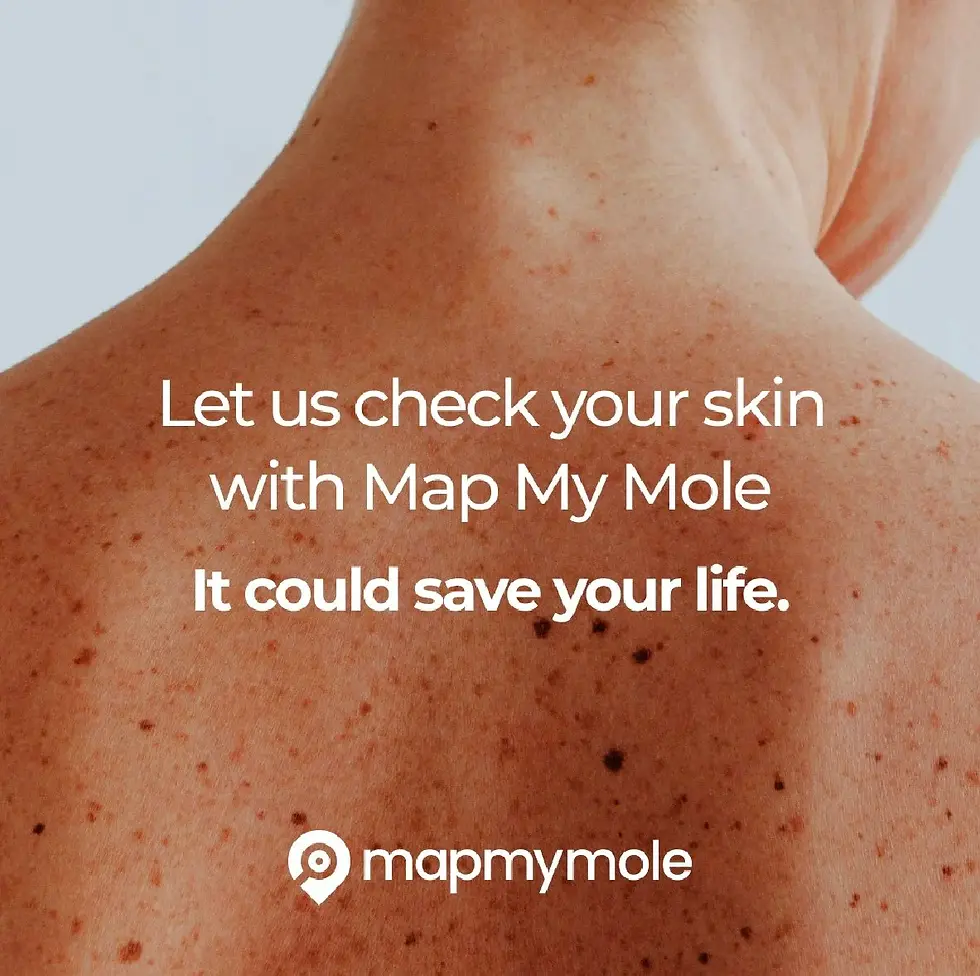
Map My Mole
Map My Mole is a UK skin lesion assessment service that helps identify moles and other skin lesions that may need further medical investigation. It is commonly offered by healthcare professionals, including GP practices, pharmacies, and regulated aesthetic clinics, as a convenient way to assess suspicious skin changes.
The service works by:
-
Taking high-quality clinical photographs and dermoscopic (magnified) images of the mole or lesion.
-
Securely sending the images to a specialist consultant dermatologist.
-
Having the lesion reviewed remotely, usually within 24–48 hours (depending on the service level).
-
Providing a report that advises whether the lesion appears benign, should be monitored, or requires further investigation or referral.
Map My Mole does not diagnose skin cancer or replace a face-to-face consultation. Instead, it is a triage service that helps identify lesions that may need urgent assessment by a dermatologist or referral through the NHS.

Who is it suitable for?
-
Map My Mole can be used to assess:
-
New or changing moles
-
Pigmented lesions
-
Skin tags
-
Seborrhoeic keratoses
-
Other unusual lumps or skin lesions
It's particularly useful if you've noticed a mole that:
Has changed in size, shape, or colour.
Has irregular borders or multiple colours.
Is itchy, painful, bleeding, or crusting.
Looks noticeably different from your other moles ("the ugly duckling" sign).
Benefits
-
Consultant dermatologist review without needing an initial GP appointment.
-
Fast results, often within 24–48 hours.
-
High-quality dermoscopic imaging.
-
Clear guidance on whether further assessment is recommended.
-
Convenient access through participating clinics.
If offering Map My Mole, it is important to clearly explain that this is an assessment and triage service rather than a definitive diagnostic test. Patients with suspicious findings should be advised to follow the dermatologist’s recommendations, which may include referral to their GP or a specialist skin cancer clinic for further investigation. Where a lesion is assessed as benign, appropriate cosmetic removal options such as CryoPen treatment may be considered.